Waves Audio has a bunch of plugins designed specifically to save time in the studio when mixing vocals.
For this reason (among other reasons), they’ve become an industry standard, and many people know it.
Working with virtual studio technology (VST) plugins is tremendously convenient, but a lot of the best VST plugins out there are very expensive. If you're looking to expand your library of VST instrument (VSTi) plugins, or tweak your mixes with some great effects or MIDI effects VST plugins, you can do it for free. Click the 'Browse' button next to 'VST Plug-In Custom Folder'. Select the folder you would like Ableton to use for VST Plug-Ins. Confirm that the 'Use VST Plug-In Custom Folder' option is turned on, and the file path listed under 'VST Plug-In Custom Folder' leads to the folder you just selected. In this article I'm going to share with you my top 10 VST plugins I recommend for producers in 2020. Stock plugins are awesome – I love them – and in my opinion you can get about 90% of the way to truly pro sound with them. However, using a few choice premium plugins can take you that last 10%.
So in this guide, we’ll go over the best Waves plugins for vocals….
… we’ve done the research so you don’t have to.
Quick answer: when it comes to the plugins Waves offers for mixing vocals, there are so many, and each offer different specified features you can use.
That said, CLA Vocals from Waves Audio is sometimes referred to as the one plugin you can use for vocals if you could only choose one.
Make sure you take a look at the others below for other choices specific for what you might need.
Let’s take a closer look 🙂
Table of Contents
- Waves Vocal Plugins Buying Guide
Find more great gear here:
Waves Vocal Plugins Buying Guide
Common Types of Vocal Effects
You might be surprised to know how much effects are applied to vocal tracks in your typical pop or rock production…
Although much ado is usually made about “clean” and “natural” vocals, most songs would sound pretty boring if the vocals weren’t unprocessed in some way.

Compression
Compression is one of the most commonly applied vocal effects. This serves to balance out the levels in the audio, preventing the peaks from clipping the circuitry and letting softer sections be heard over the music.
Read more about how to compress vocals.
Equalization
EQ is also frequently applied in order to enhance the tonal character of the vocal. In some cases, dynamic EQ is used to reduce brightness or bottom end in some sections, while boosting the same in others.
Effects
Other effects that may be applied to vocal tracks are reverb, delay, chorusing or doubling, or even distortion or modulation effects. Unless you are going for a harsh industrial vocal delivery however, effects are best applied judiciously, and always in the service of the song.
Read more about mixing vocals.
Why You Need the Right Plug-ins for Mixing Vocals
One of the reasons why you’d need any kind of plug-in is to make certain aspects of your recording stand out above the rest. And since vocals arguably are the most important aspect of a song, it makes it easier for vocals to be heard over the instrumental background if you apply the right effects or dynamics plugin.
Effects may also be applied for creative reasons, as would be the case when going for a special effect, or treating vocals in a genre-specific manner.
Then of course, dynamics processors such as limiters and compressors are used to address specific technical concerns (ie. in order to prevent clipping or to allow of an increase in RMS levels), or for artistic or creative purposes.
Who is Waves Audio?
Not that any introduction is needed… but Waves Audio is an audio software company that makes the industry standard plugins for music production. They’ve worked with a number of prominent people and companies in the audio industry over the years to develop audio tools and modeled emulations of hardware processors. They were even honored with a Technical Grammy Award in 2011 for its “contributions of outstanding technical significance” to the recording field.
However, the objective of this guide is not to “push” Waves plugins. If you check many music production and audio engineering forums, the question as to what Waves plugins are best for vocals always arise…
To settle this once and for all, and to make it easier for those that want to know, we’ve put together a buying guide to instruct you on the best choice to make among Waves Audio’s massive collection.
With that said, let us begin 🙂
The Best Waves Plugins for Vocals
CLA Vocals
CLA Vocals is an all-in-one vocal processing plug-in developed in collaboration Chris Lord-Alge, who is an award-winning engineer. It was designed to aid in vocal mixing using Lord-Alge’s very own effects parameter settings to so that users can produce quality vocal tracks in less time that it would normally take.
Six effects are include in the chain, helping you get your vocal tracks radio-ready with less effort as compared to standard vocal processing. This of it as your “instant Chris Lord-Alge” in a box.
Specs and useful features
- All-in-one vocal processor plug-in
- Developed in collaboration with Chris Lord-Alge
- Combines delay, reverb, and pitch modulation effects
- Tone controls for easy shaping of vocal tracks
- Multiple compression types for more control over dynamics
- Helps you achieve radio-ready sound quickly
User impressions
Like all the CLA plug-ins, CLA Vocals gets high marks from users for its sound and consistently results. For users that need polished, radio-friendly vocals quickly, this has become something of a go-to plug-in.
Although the CLA Vocals can do a great job of prettying up vocals in the majority of cases, some users found that it provides a little less control over certain parameters than they would have liked. While there is no doubt that it can provide all the sweetening that a vocal track needs most of the time, there are instances when a custom effects chain provided superior results.
Bottom-line
The CLA Vocals is pretty hard not to like, especially for its price. For perhaps 90% of all vocal-related processing applications, this could be the only plug-in you will need. For the other 10% of the time however, you might be better off rolling your own vocal processing chain using your DAW’s native plugins. Even so, we can heartily recommend the CLA Vocals as a useful addition to your sonic toolbox.
Demonstration
Aphex Vintage Aural Exciter
The Aphex Vintage Aural Exciter is modeled after the original Aphex hardware processing unit. Developed in association with Aphex, the plug-in does a good job at capturing the character of the original hardware device, adding presence and brilliance to even the dullest audio. The Aphex Vintage Aural Exciter is equally suited to vocal and instrumental tracks, making them stand out in a mix without the need for excessive EQing.
Specs and useful features
- Modeled after original tube-powered hardware processor
- Developed in association with Aphex
- Adds brightness, vibrancy and depth to audio
- Increases presence without increasing levels
- Suitable for vocals as well as instrumental tracks
- Mix and AX modes for insert or send configurations
User impressions
Users that have experience with both the original Aphex hardware unit and the Aphex Vintage Aural Exciter mostly have nice things to say about the plug-in. Although it can handle most any type of audio pumped through it, the plug-in has an especially attractive quality on vocals. In fact, most users that have used the Aural Exciter for vocal processing simply refuse to mix or master a track without it, citing the wonderfully ‘present’ sheen it provides.
Bottom-line
The Aphex Vintage Aural Exciter is one of those plug-ins that can be easy to overuse f you’re not careful, simply because it just sounds so good. With its ability to add life and vibrancy to even the dullest tracks, it is just way too tempting to slather it all over everything, resulting in a harsh and brittle sound. If you can manage to use the plug-in in moderation, it could be quite a potent ingredient in your recipe for vocal perfection.
Demonstration
Vocal Rider
The Vocal Rider is a vocal and dialog leveling plug-in that adjusts the level of vocal tracks automatically. It has the ability to limit the dynamic range of audio without introducing artifacts, so it saves considerable time and effort in mixing down vocals and making them stand out in a mix.
The Vocal Rider also allows for the drawing of the slider adjustments into an automation track in the DAW, enabling finer control over the level.
A Live component with Spill control is also included, which detects and processes just the vocal part alone without affecting the music or background audio.
Specs and useful features
- Automatic vocal and dialog leveling
- Automation of vocal parts speeds up mixing
- Writable to automation track for fine tuning
- Real-time processing
- Zero latency and no need for pre-scanning
- Vocal Rider Live component
User impressions
If there is one thing about the Vocal Rider that makes users almost fanatical about it, simplicity would have to be it. Many users are absolutely smitten with how easy it is to automatically control vocal levels with the plug-in, citing its great value as a timesaver in the studio.
The Vocal Rider is especially popular among those that want the dynamic limiting effect of compression without the artifacts that compressors can sometimes leech into the sound. For these users, the Vocal Rider is a more transparent and natural-sounding solution that often negates the need for a separate compressor.
Bottom-line
The Vocal Rider is such an amazingly simple plug-in in concept that you have to wonder why no one else has ever thought of it before. For the price, you simply can’t do better than this plug-in if you are after natural and musical volume leveling.
Demonstration
Renaissance Vox
One of the most powerful and versatile compressors in the Waves product line, the Renaissance Vox has been optimized specifically for processing vocals.
The controls you get for compression, gating and expansion, limiting, and level maximization are simple yet effect.
With this plug-in, producing polished-sounding vocals can be done with minimal effort.
Specs and useful features
- Combination compressors, gate, limiter, and level maximizer plug-in
- Soft-knee compression
- Auto make-up gain
- Gentle downward expander for gating noise
- Optimized for vocals
- Peak hold indicators for instant visual feedback on signal peaks
- Clip-Guard Output Limiter prevents clipping
User impressions
The Renaissance Vox has quite a surprising number of devotees, with lots of audio engineer forum users referring this as their go-to choice, which is all the more remarkable considering how long it has been around. The plug-in clearly appeals to those that live by the tenet: “If it ain’t broke, don’t fix it!”
In any case, most of the complimentary reviews of the Renaissance Vox make mention of its utter simplicity and straightforwardness, which is especially impressive given the amount of control available. For many users, the plug-in suffices for most vocal processing applications, with the added benefit of usability for a variety of instrumental tracks.
Bottom-line
The Renaissance Vox is another time saving plug-in that makes quick work of producing polished and radio-ready vocal tracks. If there is anything negative that can be said about it, it is that it sometimes imparts a sort of metallic quality to the top end. But even this can be seen as a unique, distinctive, and not-wholly-undesirable characteristic. In any case, the Renaissance Vox is well worth adding to your plug-in tool chest, even if you already have a bunch of other compressor plug-ins.
Demonstration
Renaissance Compressor
This a multi-purpose compressor that is equally effective on individual tracks as it is on entire mixes, the Renaissance Compressor also works remarkably well on vocals.
“Warm” and “present” are among its most defining sonic characteristics, yet it can be as transparent as you need it to be for natural vocal treatment.
Specs and useful features
- Two compression modes: Vintage Opto and modern Electro
- Internal brickwall limiting prevents clipping
- Auto Release Control (ARC) allows increase of RMS levels
- Double precision bit resolution processing
- Up to 24-bit/192kHz resolution
- Mono and stereo components
User impressions
The Renaissance Compressor seems to attract an equal number of users that praise it for its transparency and those that rave over its distinctive sonic character. Perhaps it is a testament to how versatile it is that people of seemingly different tastes and priorities keep finding uses for this venerable plug-in. As it is, this particular Waves classic is a favorite for vocal processing, but it can quickly switch roles and deliver punchy drum, bass, guitar, and piano tracks at the drop of a hat.
Bottom-line
There is a good reason why the Waves Renaissance Compressor still makes it to compressor plug-in rundowns years after it was released. Even with so many excellent plug-ins littering the market, the Renaissance Compressor still manages to command attention with its ability to be as transparent or as squashed as needed.
Now, you don’t necessarily want this to be the only compressor you have in your collection, and you definitely don’t want to pump all your audio tracks through it as a matter of course. But we would be lying if we said that the Renaissance Compressor didn’t have a place in every studio engineer’s arsenal.
Demonstration
Renaissance DeEsser
As we mentioned in the de-esser plugin guide, the Renaissance DeEsser is one of the best at reducing and eliminating the sibilant “ess” and “shh” sounds that can ruin a great vocal take.
Its ability to reduce unwanted high frequencies while preserving the audio quality is quite good, as it’s an accurate de-essing technology can handle sibilance in male and female vocals.
Specs and useful features
- Simple and effective removal of harsh sibilance from vocal tracks
- Ideally suited for recording, mixing, live sound, and broadcast
- Frequency-dependent dynamics control preserves original sound
- Simple adaptive threshold
- Adjustable gain reduction
- Phase compensated crossover reduces artifacts
- Audio and side-chain monitoring
User impressions
Most users of the Renaissance DeEsser have nothing but good things to say about this supremely useful plug-in. Cleanliness and transparency are among its most frequently-praised characteristics, although many users also attest to its ability to nuke sibilance aggressively without thrashing the source audio.
Some users did complain about the absence of an attenuation meter. Others felt that the graph doesn’t do an adequate job of displaying how much of the audio is being treated. Nevertheless, reviews are generally favorable for the Renaissance DeEsser. Many users even rely on it exclusively, even with many other de-esser plug-ins available on the market.
Bottom-line
In terms of quality, ease of use, and consistency, Renaissance DeEsser is classic Waves through and through. You simply can’t beat a classic, and this one definitely fits into that category. A very effective vocal de-esser that can also work wonders on cymbals, guitars, and other high frequency tracks, the Renaissance DeEsser is an essential add on to your set of studio goodies.
Demonstration
Waves Doubler
The simply-named, Doubler adds a doubling effect to source audio, making it sound bigger, wider, and more present in a mix. This particular plug-in more too, offering delay and pitch modulation effects as well. The Doubler is both a unique effects processor and a time-saver in the studio, negating the need for traditional double-tracking in most cases.
Specs and useful features
- Double-tracking and chorus capabilities
- Adds shimmer and presence
- Produces 1980s-style harmonizing and pitch detune effects
- Automatic vocal doubling
- Two-voice and four-voice capabilities
User impressions
Ease of use and efficiency are pretty much the most mentioned characteristics of the Waves Doubler, and it’s easy to see why. Making short work of turning even the most pedestrian solo vocals into angelic choirs, the Doubler is frequently praised for the ability to thicken and widen vocal tracks without introducing phasing.
Many users especially appreciate how much time they save in the studio by not having to record multiple vocal tracks. That being said, some users did feel that actually recording as many vocal takes as needed provides better results.
Bottom-line
The Doubler is a great way to add depth, width, and ambience to your vocal tracks. Although this won’t substitute for a meticulously-recorded array of vocalists–or even one or two vocalists recording multiple takes–it does have some charm and flavor of its own. Besides, for the price, you not only get a very capable vocal doubler, but a distinctive sounding plug-in that widens up most any sound source nicely.
Demonstration
Final thoughts – Which to Get?
Most of these plug-ins are so different from each other that it would be pointless to say which one is the “best.”
Suffice it to say, each one brings its own unique set of qualities to the table, and each could potentially find use in a studio setting.
That said, the CLA Vocals has to be mentioned as top choice for its convenient and extremely useful blend of multiple signal processors in one unit. There is also no denying how quickly and easily it can enable you to crank out radio-ready vocal tracks. For that reason alone, we would have to give the CLA Vocals top marks.
Both the Aphex Vintage Aural Exciter and the Vocal Rider stand in a class of their own, but for different reasons. The Aural Exciter is at the very least a modern-day classic, with its tone enhancing qualities having become essential for vocal polishing.
The Vocal Rider for its part does what most other compressors are unable to do so simply and so elegantly: control dynamic levels without adding nasty artifacts. Going solely by that, the Vocal Rider deserves special mention.
As for the Renaissance Compressor and the Renaissance Vox, both of these are quite capable plug-ins that will stand proudly with the rest of your audio processing tools. Even though they have been around for a number of years, there is life in these old dogs yet!
Finally, the Renaissance DeEsser–and certainly the Doubler–might not be quite as essential as all the other plug-ins mentioned. Nevertheless, they do have their uses, and at the price they are going for these days, it would be silly not to at least consider them if you are eager to have a full suite of vocal processing tools at your disposal.
Virtual studio technology (VST) is an audio plug-in software interface that integrates a software synthesizer and effects into digital audio workstations. It uses digital signal processing to simulate a traditional recording studio’s hardware in software. There are both commercial and freeware versions of VST plug-ins available in the market. Think of VST plugins as an affordable way of making your home studio sound like an expensive commercial studio setup. I have listed a couple of libraries and frameworks that can handle most of the coding required in developing VST plug-ins. It is supported by the following platforms: OSX, Windows, Linux, iOS, and Android. It is free for non-commercial releases, but the commercial license works our best. It also covers 64bit systems. Pricing of its commercial license Best free vst plugins 2014 mac. Watch this video on how to create an awesome distortion VST/AU Plug-in using C++ / JUCE Framework SynthEdit is a framework and a visual circuit design that allows you to create your own synths with only drag & drop without programming. Therefore giving you the flexibility of using your DSP algorithms inside the modules. At the time of writing this the 64-bit version is in Alpha and its creator Jeff McClintock is working on the ability to exporting it to AU. It’s got a ton of community-produced modules and works great with the 32-bit version. It is soft on your wallet – goes for $70. Check out this video how SynthEdit work – FL SynthMaker aka flowstone comes free with FL studio. You’ll be required to source for information from different sources depending on what your specific goals are. For beginners, before learning how to code VST plugins, I would advise you to check out these environments: These environments allow you to build something unique without having to write low-level code which most people find difficult to master. You’ll be required to know different areas, and if you already have some, then you’ll only require to fill in the gaps. Check out this video to learn how to build and design your VST Plugin using JUCE Understanding sound and its properties are essential before embarking on the development of VST plug-ins. I have outlined a couple of online resources you should go through them: Fundamentals of Digital Audio Processing The Scientist and Engineer’s Guide to Audio Signal Processing Discrete-time systems, sampling theorem, audio DSP, maths, psychoacoustics, sound analysis, and sound modeling. Signals, Sound, and Sensation by William M. Harmann The book got an introductory text on psychoacoustics and the readers on a journey through the mathematics of signal and processing from its beginnings. Many professional VST plugins available on the market have been written in C++. There are also several other languages you can use, but each got their pros and cons. Learning how to develop VST Plug-ins as you’re learning to program isn’t easy. I usually recommend learning how to program before starting to create VST plug-ins. The Audio Programming Book by Richard Boulanger – This book comes highly recommended for those who want to learn audio plug-ins. BasicSynth by Daniel Mitchell – This one shows you how to create a custom synthesize in software using C++ programming language. For more further information about VST development, you should definitely check these resources: Audio Software (VST Plugin) Development with Practical Application JUCE framework for VST-plugin development You should have some basic engineering mathematics such as linear algebra, complex analysis, among others. Visit this website to get practical algebra lessons: www.purplemath.com. You must know what an FFT routine is and why it is useful. Advanced content focusing on audio will usually require you to have at least a conversational level of DSP understanding. Check out these resources on DSP: Online and Free: Print: Audio DSP extends on core DSP concepts to include the way digital signal processes apply to digital audio. It covers subjects such as audio filters, delays, and non-linear effects; think compression. DAFX by Udo Zolzer is a book that comes highly recommended and covers many aspects of audio DSP technique. Check out these online resources to get more info: DSP Audio Classics Below are threads on VST Plug-ins I found from a couple of online discussion forums: Advice for someone with ZERO experience I have listed some books that can serve as a resource in your pursuit of learning how to make VST plug-ins. Check them here: JUCE JUCE is a highly recommended and all-encompassing C++ class library for developing cross-platform software. JUCE includes components for VST, AU, and RTAS. You should have at least a basic grasp of JUCE if you intend to use C++ for the development of your VST plug-in. IPlug This is a C++ framework for developing audio plug-ins and GUIs. VST.NET It allows VST Plugin developers to write Plugins in any .NET language. It also eases the transition between the C++ and .NET world and its framework built on top of the interop layer provide a clear and structured architecture. Feel free to check this Delphi library for creating VST plugins, VST hosts but also ASIO applications: Delphi ASIO and VST It also includes the algorithm for filters and dynamics. C++ is one of the best programming languages for creating VST Plug-ins, and the reason for this is that C++ has a wide range of frameworks and libraries that work so well in creating VSTs. Read more What’s the Best Way How To learn C++? The WDL-OL library makes C++ an attractive programming language for VST plugins because it helps you with the following: Understanding what VST Plugins are and their role within the music production industry provides you with the knowledge of identifying the most effective tools for your music production outfit. It makes your music sound like it was produced in a million-dollar music studio.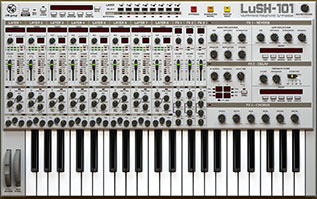
What are the Best Tools to Develop VST Plug-ins?
JUCE Cross-Platform C++ Library
Despite the cost of the license for retail releases, it is the only library/framework option for a 64bit cross-platform.SynthEdit
FL SynthMaker
It has a straightforward drag-and-drop graphical interface and a wide range of components. You can use it to code modules and DSP in Ruby and comes with loads of examples to get started quickly and its ability to assist you in creating a prototype within a short time is a plus.How Are VST Plugins Made
Audio Basics
Vst Plugins Best Free Download
Programming
Maths
Digital Signal Processing
How To Make Vst Plugins Bigger In Fl Studio
The Scientist & Engineer’s Guide to Digital Signal Processing
Understanding Digital Signal Processing by Richard G. LyonsAudio Digital Signal Processing
DSP Audio Algorithm Notes by XOXOS
Developing a Vst Effect Plugin Where To Start?
What is your development setup?Books
Free Vst Plugins
Audio Plug-ins frameworks
What is the best programming language for the VST plugin?
Create Vst Plugin
Best Professional Vst Plugins
How To Make Vst Plugins In Visual Studio